


In our annual reports to our donors over the last few years, we have been telling you about what we are doing in our two major programmes: STRONG+, aiming to support migrants and refugees in improving their education, developing their self-esteem and empowerment, so as to integrate better and represent their communities to local political institutions; CREATE, aiming to spread the knowledge of Catholic Social Teaching in Central and Eastern Europe so that it can be better operationalized and a source of social innovation, primarily through creating public intellectuals and regional solidarity.
In 2024, the first round of the CREATE programme is coming to an end, so we focus this first part of the report on a brief summary of the programme as a whole. After that, we present some personal stories of students in the STRONG+ programme: two in the bachelor’s degree programme, one from Africa and one from Latin America, as well as a Ukrainian who has been studying in our programme on the management of non-profit organisations. CREATE started in 2021 with the launch of the first round of the “CREATE Prize”. Overall, it has involved 65 people across its 5 activities, some in more than one activity or more than on
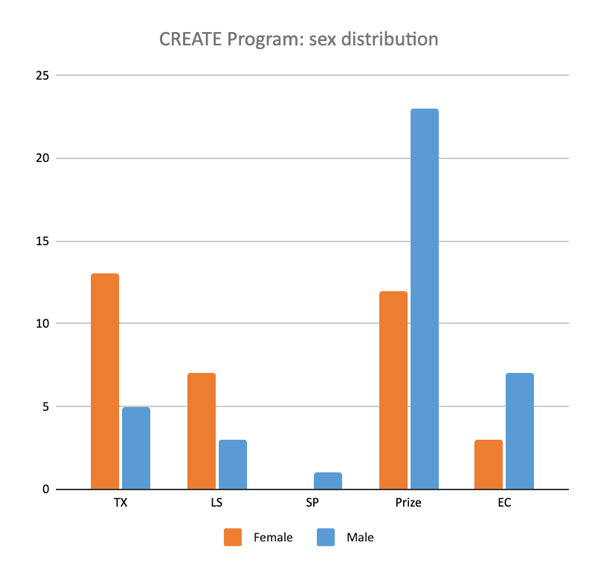
ce in the same activity – hence the total in the table below of 74 – almost equally divided between men and women (33:32 respectively), covering 10 of the 20 countries in
the Central and Eastern European region (those that were not represented either had low numbers of
Catholics or, if they had higher proportions of Catholics, small national populations).
Here are some of CREATE’s achievements:
Countries | Prize | LS | SP | TX | EC | Tot |
Croatia | 12 | 3 |
| 5 | 2 | 22 |
Czech | 1 |
|
|
| 2 | 3 |
Hungary | 1 | 2 |
| 1 | 1 | 5 |
Latvia | 1 |
|
| 1 |
| 2 |
Lithuania | 1 | 1 |
|
| 1 | 3 |
Poland | 9 | 3 | 1 | 7 | 1 | 21 |
Romania |
| 1 |
|
|
| 1 |
Slovakia | 5 |
|
|
| 1 | 6 |
Slovenia | 2 |
|
|
| 1 | 3 |
Ukraine | 3 |
|
| 4 | 1 | 8 |
Totals | 35 | 10 | 1 | 18 | 10 | 74 |
CREATE Prize (CP): 35 essays, with 4 winners and 15 essays published in a series of four books. Apart from the wide range of topics covered, one of the interesting things about the prize is the number of young men it attracted; the prizewinners were all men, and two thirds of the submissions and published essays were by them too. Two other notable factors are that the prize tended to attract a relatively young cohort, like TX (see below), when compared to the other CREATE activities, and had the widest representation of countries.
Laudato si scholars (LS): 10 people, 7 of whom were women. They included 2 doctorate students and 8 post-docs, primarily from Croatia, Poland and Hungary. They came to Rome three times a year for intensive programmes, which meant that participation was possible for married people with children; 8 out of the 10 were married with families.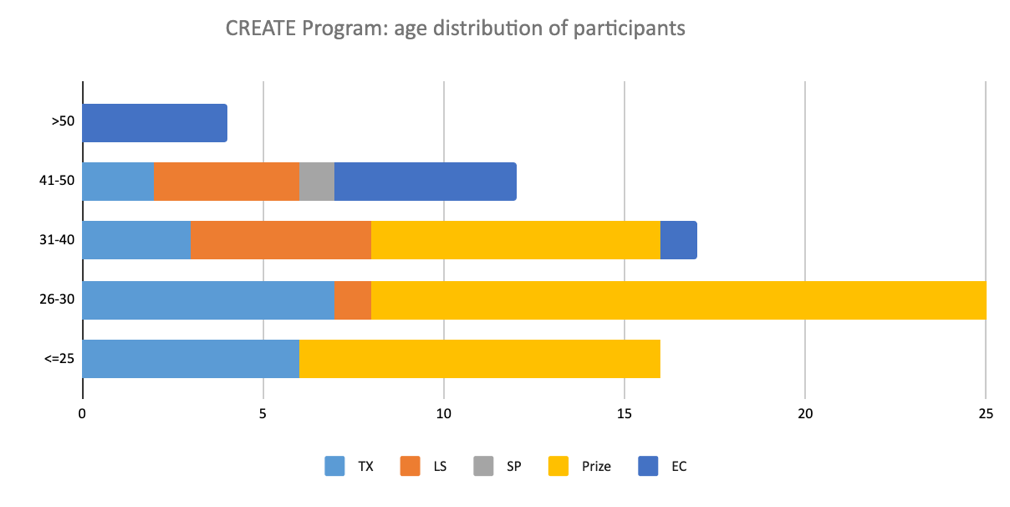
Salamanca Process scholars (SP): 1 post-doc Dominican friar from Poland. He was able to develop training programmes for the brothers in his province, widening the impact of CREATE among the Dominicans in the region.
Toolbox semester (TX): 18 participants, with a high proportion of women (72%), with the biggest numbers from Poland, Croatia and Ukraine. This activity included a visit programme that brought the students into contact with many parts of the Holy See administration, as well as the Embassies and international organisations in Rome.
Expert Council (EC): Like the prize, the EC was one of the most representative parts of the programme, including participants from 8 out of the 10 countries represented. They met once a year in Rome and worked on specific topics, publishing their results either in books with us or in international journals. They also wrote prefaces for the books of the prizewinning essays, and helped with the selection of candidate for other parts of the CREATE programme.
My name is Anastasiya Babyak. I had the privilege of taking part in the Master in Management of Third Sector Organizations with a scholarship from the STRONG 2023-2024 Program. I am a 30-year-old Ukrainian and Italian citizen, and my personal connection to the challenges of displacement and cross-cultural understanding has significantly influenced both my academic and professional journey. Driven by a deep interest in issues of migration, conflict resolution, and the promotion of human rights, I pursued a degree in International Relations. 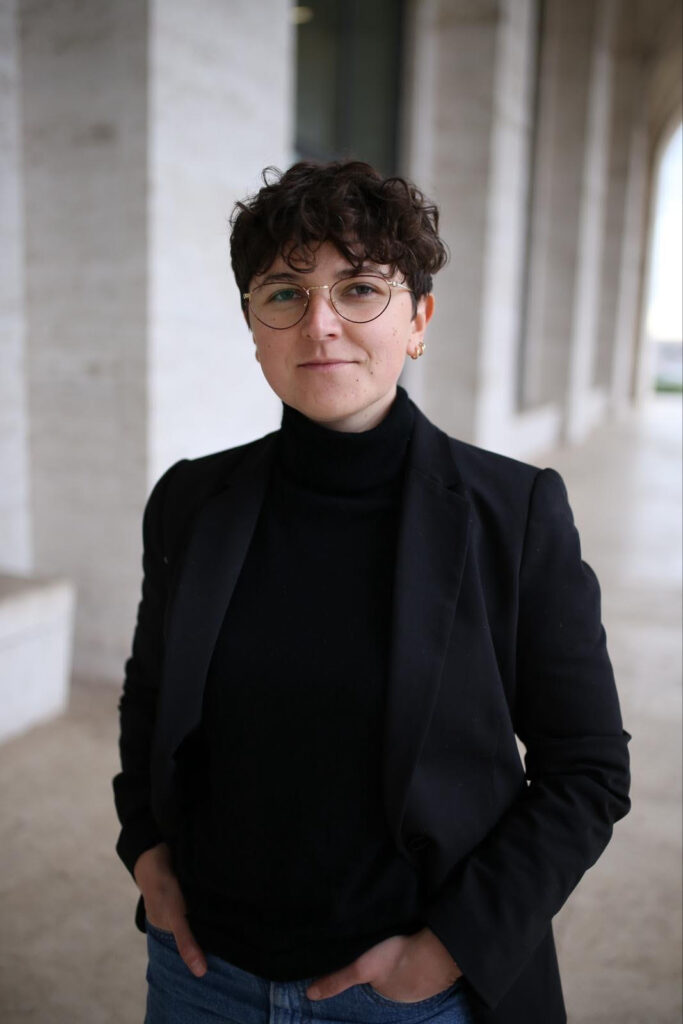
This commitment became even more personal when the Russian military invasion of Ukraine began in 2022, and I found myself working directly with displaced populations – initially providing support to Ukrainian refugees as an intercultural and linguistic mediator with Médecins Sans Frontières, and later extending my work to all migrants and individuals under international protection as a case manager and field coordinator with Refugees Welcome Italia.
My involvement in third sector organizations during this time revealed to me the vital role they play in crisis response, social cohesion, and the provision of essential services to at-risk populations.
However, while my academic background gave me a broad understanding of international issues, I realized that I needed further training to feel truly equipped in this field. This Master Program was the ideal opportunity to deepen my knowledge in areas such as project management, coordination, and community building. Furthermore, I have gained better awareness of the internal dynamics of third sector organizations, delving into regulatory frameworks, funding mechanisms, and ethical considerations that guide our work. The insights from each lecture became invaluable practical guides, helping me coordinate projects and foster stronger community connections. The professors, highly professional and deeply inspiring, shared not only their expertise but also a new perspective on the impact and potential of third-sector work.
Last but not least, the program proved to be not only an academically stimulating journey, but also a profound international experience. The collaboration with colleagues from around the world and the inspiration drawn from a deeply committed and professional faculty played a crucial role in empowering change, allowing me to perceive firsthand how transformative third-sector work can be when driven by intention and collective effort.
Anastasiya Babyak
In September 2021 I won the STRONG scholarship thanks to which I had the opportunity to pursue a Baccalaureate degree from the University of St. Thomas Aquinas in Rome, and on October 24, 2024, I concluded the journey by earning my Bachelor’s degree in Social Sciences, an accomplishment that teaches that it is never too late to pursue one’s dreams and that opportunities often happen when we don’t even expect them. Indeed, it is curious to think that I found the notice promoting the Strong program scholarship in a whatsapp group, none other than the group of the association of Senegalese in Rome of which I am a founding member. “What a great opportunity”, I thought, still remembering the speed of my reaction to the message and the enthusiasm with which I prepared and sent my application in record time. I can’t explain how, but right from the start I had a positive feeling, because I felt inside that this was it, something was telling me to believe it all the way.
Before that, I had had to set aside my course of study for several years and for several reasons, mainly because of the lack of bureaucratic recognition of my previous studies in my home country. I think it is important to mention this to emphasize how sometimes bureaucracy can be a major hindrance for us foreigners. Fortunately, this case was different; I had the opportunity to participate in the interviews and the pleasure of finding out that I had been selected.
The opportunity had finally arrived but the difficulties were not lacking. It was a real challenge to reconcile work, studies and family commitments, and in spite of that, with great determination and solidarity among us students, I was able to pursue the endeavor that allowed me to realize a dream that I had thought impossible to achieve. For this I will always be grateful to the Angelicum. Not only does obtaining the degree crown an achievement and represent an added value for my personal growth, but it is also a crucial one for my professional career as a Cultural Linguistic Mediator. This is a profession that represents a vocation for me and that has seen me for several years committed to immigrants by giving them all-round support in the path of integration and social inclusion in the host country.
In addition to the activity of mediation, my social commitment is glimpsed in the active participation in various associations of communities of foreigners living in Italy and especially associations of Senegalese also as a founding member.
You will agree with me that the adventures of an immigrant woman who has constantly tried to integrate into a country with often few possibilities cannot be summarized in an article. However, I took advantage of these few pages and this opportunity offered to me to open a small window of reflection on the Italian socio-cultural framework regarding the issue of immigration. Placing attention and dialogue on these issues is a fundamental step on a path toward a tomorrow where integration and the enhancement of development cooperation will be the basis of relations between country of origin and host country. What motivates this choice of inviting reflection on immigration? In Italy, for more than 30 years, the socio-cultural framework regarding immigration and inclusion has remained immobile and archaic, and in my opinion the discussion of it can be centred on three themes that I would like to focus on:
1. Migrant reception policy: the most recent case is Italy-Albania, with the export of migrants;
2. Second generations: the right to citizenship for children of migrants born and/or raised in Italy;
3. International Cooperation Policy: law 125/14 (art. 2 and 26).
Our country adopts a stagnant policy based on agreements aimed only at blocking or rejecting landings instead of seeking possible solutions.
On the subject of the recognition of second generations, and the granting of citizenship to those born here, the debate has been ongoing for years without any real change, despite the fact that a reform was presented in October 2015 and passed in the Chamber of Deputies. Since then, it has been stuck in the Senate. In the area of Cooperation, however, a giant step forward has been taken at the regulatory level. With the law 125/14, a leading role has been given to immigrant organizations and associations in activating development cooperation processes (art. 2 and 26). Italy thus positions itself at the forefront of Development policies, promoting the participation of diasporas both on a political-institutional level (with their presence in the National Council for Development Cooperation) and on an operational level, through direct access to funding calls. This allows me to end my reflection on a positive note.
My wish is that this country that we now consider home can always improve and that stories like mine can be on the agenda.
Aissata Camara
My name is Clara Jimenez. I was born in Caracas, Venezuela, 52 years ago. In 2014, I decided to leave my home country and move to Italy, settling in the beautiful city of Rome. The beginning of this journey was anything but easy. I faced a challenging adaptation process, marked by cultural differences and the difficulty of finding a dignified job. The precarious labour market conditions made my determination waver to the point where I was considering returning to Latin America.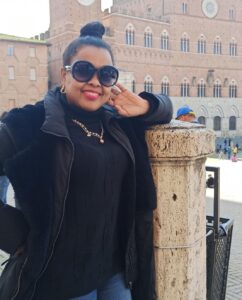
However, God had other plans for me. In my darkest moment, I met a wonderful young man who, during a casual conversation, suggested an opportunity that would radically change my life. I shared my desire to study, and he enthusiastically told me about the Strong program. At that time, they were looking for people eager to embark on an academic journey. I did not hesitate for a moment: I seized the opportunity, and he introduced me to Marina.
From the very first meeting, I was warmly and kindly welcomed. I began my university journey with hope and enthusiasm, and I must say it was one of the most significant decisions of my life. Studying at the Angelicum, in a multicultural and inclusive environment, has been a profound transformation for me. It enriched me not only professionally but also personally, giving me a new perspective on life.
A key element of my journey has been the unconditional support of my husband. In every moment of difficulty, he was by my side with love, patience, and understanding, giving me the strength I needed to keep moving forward. His encouragement and belief in my abilities, even when I doubted myself, were essential in overcoming obstacles and achieving my goals. Without him, my path would have been much harder.
A special thanks goes to the Strong program, which played a decisive role in making my dream come true. This initiative, which supports people facing financial difficulties by covering university tuition fees, represents a beacon of hope for individuals who otherwise wouldn’t have the chance to pursue higher education. Thanks to Strong, I was not only able to start this journey but had the financial peace of mind to see it through to the end. I express my deepest gratitude to everyone who makes this extraordinary project possible, driven by a vision of solidarity and altruism. The commitment of those supporting Strong goes beyond financing education; they offer individuals like me a new chance in life, an opportunity for personal and professional redemption that can transform the future of entire families.
I am especially grateful to the university and to my professors, whom I hold dearly for their invaluable guidance and support. Their dedication and encouragement were instrumental in helping me overcome significant challenges and achieve goals that once seemed unattainable. Every sacrifice made during these three years of study has been rewarded with the joy of seeing my dreams come closer to reality.
I thank God for this wonderful opportunity because it has allowed me to look toward the future with fresh eyes, full of hope and determination. Now I feel ready to continue studying, applying what I’ve learned, and contributing to the well-being of those around me.
This journey has been more than an academic path; it has been a true personal rebirth. Looking back, I see how the initial difficulties were overcome through love, support, and faith in a better future. Now, with enthusiasm, I face the road ahead, grateful to my husband, to the Angelicum, to the Strong program, and to everyone who made this extraordinary experience possible.
Clara Jimenez